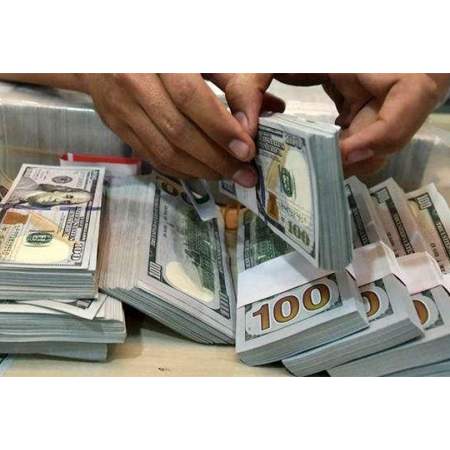
In today's digital age, the prevalence of counterfeit money has become a significant issue for economies worldwide. Among the various schemes and techniques employed by counterfeiters, the term "counterfeit money onion" has surfaced, referring to the layered and complex nature of these counterfeit operations. This metaphorical 'onion' represents the different layers of deception and the sophisticated processes involved in producing fake currency that can easily fool unsuspecting individuals and businesses. In this article, we will peel back the layers of the counterfeit money onion and explore the implications of this pressing issue.
The Layers of Deception
Courts also consider aggravating factors, such as using counterfeit money in schemes that target vulnerable individuals or businesses. The condition of the counterfeit currency may also be relevant—bills that are obviously altered or poorly printed can support an inference that the defendant knew they were fake. A conviction does not require the counterfeit money to be successfully used; attempting to pass a fake bill, even if rejected, is enough. The law also criminalizes possession of counterfeit money with intent to defraud, meaning individuals cannot escape liability by claiming they had not yet attempted to use it.
The counterfeit money onion consists of several layers, each contributing to the intricacy of the operation. From the initial design and printing processes to the distribution and acceptance phases, counterfeiters have developed methods that evade law enforcement and security measures. The first layer typically involves advanced technology, allowing counterfeiters to create realistic replicas of legitimate currency. High-quality printers and graphics software play a crucial role in this stage, where attention to detail can make the difference between successful counterfeiting and detection.
Identifying the Tell-Tale Signs
As we delve deeper into the counterfeit money onion, it's essential to recognize the signs that can help distinguish genuine currency from its counterfeit counterparts. Experts recommend examining various features such as:
- Watermarks: Authentic bills often have watermarks that are difficult to replicate.
- Color-Shifting Ink: When you move a bill, the ink may change color.
- Microprinting: Tiny text can be found on genuine currency that is not visible to the naked eye.
Each of these elements serves as a protective layer, but counterfeiters are continuously finding ways to imitate them, further complicating the counterfeit money onion.
The Economic Impact
The proliferation of counterfeit money has significant ramifications for the economy. As fake currency circulates, it undermines the integrity of the financial system and erodes public trust. Businesses can suffer financial losses, and consumers may pass counterfeit bills unknowingly, which can lead to legal troubles. The costs associated with combating such illicit activities can strain resources, impacting law enforcement and financial institutions alike.

Countermeasures and Solutions
- In 2016, a data breach exposed the Besa Mafia as a total scam.
- Archive.today is considered an important tool to track changes across government and corporate websites, preserve cultural heritage, and keep knowledge outside of autocrats’ reach.
- The only problem you’re gonna have is being upset every time you see some their product on your counter and remembering it’s NOT REAL!
- Security researchers document large typosquatting campaigns where attackers create near‑identical onion domains to harvest credentials or payments; one researcher found hundreds of cloned or modified domains claiming to have defrauded users across hundreds of popular onion services .
To combat the layers of the counterfeit money onion, various stakeholders have implemented strategies and technologies. Law enforcement agencies work diligently to track and apprehend counterfeiters, while financial institutions invest in advanced fraud detection systems. Public awareness campaigns also play a vital role in educating individuals about recognizing counterfeit bills and understanding the repercussions of using fake currency.
Moreover, new technologies such as digital currencies and blockchain are emerging as potential solutions to the counterfeit issue. By introducing more secure forms of currency, these innovations aim to reduce the chances of counterfeit money entering circulation.
- In 2019, there were approximately 8,400 active sites on the dark web, selling thousands of products and services daily.
- “He wanted those five-star reviews to help him sell more bills.
- The creators assert that because their technique is so strong, even malware with root access could not determine the machine’s IP address.
- WASHINGTON—The U.S. economy ceased to function this week after unexpected existential remarks by Federal Reserve chairman Ben Bernanke shocked Americans into realizing that money is, in fact, just a meaningless and intangible social construct.
Conclusion
As we navigate the complexities associated with counterfeit money, it is crucial to understand the counterfeit money onion and its implications. Awareness of the various layers—from the methods employed by counterfeiters to the economic effects they have—can help individuals and institutions better protect themselves. By peeling back each layer and implementing effective countermeasures, we can collectively fight against the challenge of counterfeit currency.