The emergence of Bitcoin has revolutionized the financial landscape, offering an alternative currency that is decentralized and largely anonymous. One of the most controversial aspects of Bitcoin is its usage on the dark web, a segment of the internet that is not indexed by traditional search engines and often associated with illicit activities. As the cryptocurrency gains popularity, it becomes essential to understand the implications of its role on the dark web and how it facilitates both legal and illegal transactions.
The Dark Web: A Primer
The dark web is part of the deep web, which includes all parts of the internet that are not indexed. Here you will find various platforms and marketplaces that operate with little to no regulation. The dark web can be accessed through specific software like Tor, which anonymizes the user's identity.
Characteristics of the Dark Web
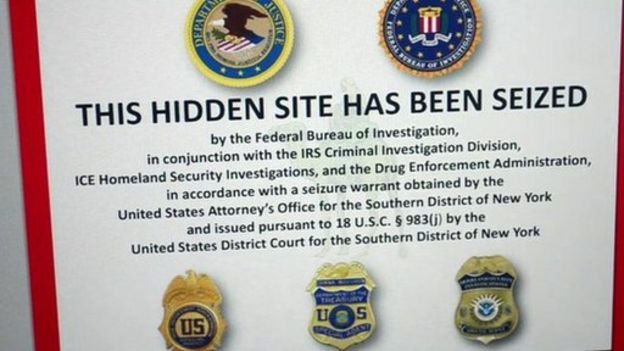
- On 4 February 2015, the jury convicted Ulbricht of seven charges, including charges of engaging in a continuing criminal enterprise, narcotics trafficking, money laundering, and computer hacking.
- While they provide an added layer of privacy, Bitcoin tumblers can also be used for money laundering, tax evasion, and illicit activities in the dark web.
- “Many people have heard of bitcoin now, but I agree that the vast majority–99%–don’t know what it really is.
- Following the seizure of 97 Bitcoin from White, it was noticed that 50 Bitcoin had been withdrawn from the digital wallet.
- These onion addresses will remain online even if the original page disappears.
- Anonymous Access: Users can browse and make transactions without exposing their identity.
- Unregulated Marketplaces: A variety of goods and services, including illegal ones, can be bought and sold.
- Cryptocurrency Usage: Bitcoin is the primary currency for most transactions on the dark web.
This feature is satisfied when \(\ell _i(t) \ge L\), where L is the fixed value of minimum lifetime. Fifth, we consider the lifetime of each entity i at time t, defined as the time interval between the first and the last transaction performed by the entity until time t, denoted by \(\ell _i(t)\). For each entity, we keep track of the cumulative values of the six features for each transaction performed by the entity over time. Nevertheless, due to their unregulated nature, DWMs exhibit behaviours not observed in regulated marketplaces. After a major external shock in 2017, the S2S network shrinks but, unlike the multiseller network, recovers, and grows again (though slower than the multibuyer network). The nodes are sellers that are active in that year, and an edge is placed between two sellers if at least one transaction occurs between them during that year.
Bitcoin: The Currency of the Dark Web
Bitcoin's unique structure makes it an ideal currency within the dark web. Its decentralized nature, ability to facilitate anonymous transactions, and pseudo-anonymity have made it the go-to choice for many dark web users. Here are some reasons why:
Benefits of Using Bitcoin on the Dark Web
- Anonymity: While Bitcoin transactions are recorded on a public ledger, users can maintain a degree of privacy.
- Global Accessibility: Bitcoin can be sent and received across borders without any intervention from authorities.
- Low Transaction Fees: Bitcoin often has lower fees compared to traditional payment systems, attractive to darknet vendors.
Illicit Activities Linked to Bitcoin on the Dark Web

While Bitcoin can be used for legitimate purposes, it has gained notoriety for its association with various illegal activities, including:
- Drug Trafficking: Numerous dark web marketplaces allow the buying and selling of illegal drugs using Bitcoin.
- Weapons Trade: Some platforms facilitate transactions for firearms and other weapons.
- Stolen Data and Hacking Services: Users can purchase stolen information or even hire hacking services with Bitcoin.
Legitimate Uses of Bitcoin on the Dark Web
- Moreover, dark web bitcoin mixers can be useful in scenarios where users want to make transactions that may be deemed illegal in their jurisdictions.
- The revenue per deposit address on the clear web is three times higher than on the dark web, and the total amount is 40 times higher on the clear web for a shorter period.
- ICA tries to avoid false positives, such as those arising from CoinJoin transactions, where multiple users intentionally mix their inputs to obscure transaction trails.
- It is important to note that while regulation can help address dark web Bitcoin activities, it should be balanced to ensure that privacy and anonymity are not compromised.
- Data for the study was gathered from the Dark Web Monitor and Iknaio Cryptoasset Analytics.
Not all transactions on the dark web are criminal in nature. Some users engage in activities that, while not illegal, are often shunned by society:
- Privacy-Centric Services: Some users turn to dark web services for enhanced privacy in their communications.
- Whistleblowing Platforms: Certain sites provide a safe space for whistleblowers to share sensitive information without revealing their identities.
- Censorship-Resistant Journalism: Journalists sometimes use the dark web to report on issues that are heavily censored or dangerous in their regions.
Future Perspectives
The role of Bitcoin on the dark web raises a variety of questions about regulation, legality, and ethics. As cryptocurrencies become more mainstream, governments and regulatory bodies are increasingly looking for ways to monitor and control their use.
Potential Developments
- Increased Regulation: More countries may implement laws to regulate or restrict cryptocurrency usage, particularly on the dark web.
- Enhanced Security Measures: Marketplaces on the dark web may adopt new technologies to protect transactions.
- Cryptocurrency Alternatives: Other cryptocurrencies may rise in popularity, providing more options for users.
FAQs
Is all activity on the dark web illegal?
No, while many activities on the dark web are illegal, there are also legitimate services that prioritize privacy and free speech.
How can I protect my identity while using Bitcoin on the dark web?
Utilizing VPN services, Tor browsers, and ensuring secure wallet practices are essential steps to safeguard personal information.
Can Bitcoin transactions be traced?
While Bitcoin transactions are anonymous, they are recorded on a public ledger, which means that they can potentially be traced back to users if their identities are revealed.
In conclusion, the intersection of Bitcoin and the dark web presents a complex landscape filled with both risks and opportunities. As Bitcoin continues to evolve, its implications for society, economy, and law will be critical to monitor and understand.